
Services
We serve the quality and reliability to the people.
Calibration, Testing & Diaphragm Seal Filling
AMI ELITE delivers world-class metrology services to guarantee the accuracy, compliance, and reliability of your critical measuring instruments. Operating under strict ISO/IEC 17025 standards, our advanced facility uses precision environmental control systems to eliminate variables and provide the lowest possible measurement uncertainty.
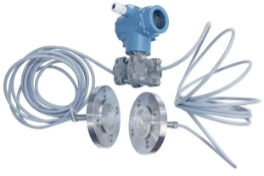
AMI ELITE offers cost-effective maintenance and repair services for both our own diaphragm seal systems and those from other recognized brands. In the process industry, diaphragm seal systems are essential for demanding applications with extreme temperatures ranging from -90 °C to +400 °C. They protect sensitive measuring instruments from aggressive, corrosive, abrasive, highly viscous, or toxic media.
Our specialized service significantly reduces your Total Cost of Ownership (TCO). Because a process transmitter often outlasts its wetted parts, you rarely need to replace the entire system. By reusing your existing transmitter and only replacing or repairing the diaphragm seal, you maximize the lifespan of your instruments. Scheduling this as preventive maintenance during planned plant shutdowns allows you to minimize downtime and secure substantial cost savings.
Our core capabilities include:
Diaphragm Seal Integration: Specialized in assembly, filling and testing.
Calibration & Testing: Precise verification under optimal conditions.
Inspection: Rigorous compliance and quality checks.
Repair & Maintenance: Comprehensive service to extend equipment life.

Industries Shaped By Our Services
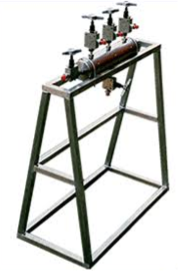
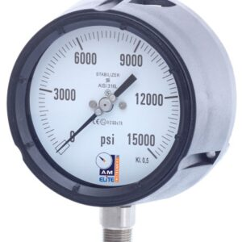
Pressure Gauges must be calibrated to ensure safety, maintain process accuracy, and prevent catastrophic equipment failures. Over time, everyday factors like mechanical wear, extreme temperatures, vibrations, and pressure spikes cause a gauge’s internal components to drift away from their original factory settings. Because a gauge can continue to display a reading even after its accuracy has degraded, regular calibration is the only way to detect and correct these invisible errors, and ensures accuracy by comparing the device against a traceable, higher-precision standard to guarantee safety, quality, and efficiency in the process.
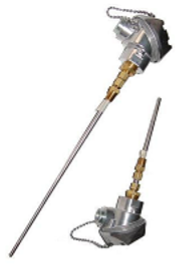
Temperature Gauges must be calibrated to counteract sensor drift and ensure that they continue providing accurate, reliable readings over time. Because all physical instruments change with age and usage, regular calibration is essential across industrial, lab, and commercial applications. Regular calibration ensures accuracy by comparing the device against a traceable, higher-precision standard to guarantee safety, quality, and efficiency in the process.
Transmitters must be calibrated to ensure they provide accurate, reliable data by correcting for “drift” caused by environmental factors, mechanical stress, and regular wear and tear overtime. In industrial environments, control decisions whether managed by an automated PLC/DCS system or a human operator depend entirely on transmitter signals. If a transmitter sends an incorrect signal, the system logic or operator response will also be wrong, leading to severe operational, safety, and financial consequences. Routine transmitter calibration keeps automated systems stable by correcting errors in several key areas.
Temperature elements must be calibrated to ensure accuracy, maintain safety, and guarantee regulatory compliance. Over time, physical changes in sensor materials cause sensors to drift from their original specifications. Without regular calibration, this drift leads to inaccurate readings that can ruin products, damage expensive equipment, or compromise safety.
A diaphragm seal integrated and filled with fluid in a Gauges / Transmitter isolates the sensitive internal sensing element from harsh, hot, corrosive, or clogging process media.
Purpose of Integration is Protection, Prevention of Clogging, Hygiene and Safety, and Remote Mounting
Role of Filling Fluid is used for Hydraulic Transmission and Measure accurate Signal.
Pressure relief valves (PRVs) must be calibrated to ensure operational safety, protect personnel from injury, and prevent catastrophic equipment failure or explosions caused by overpressure. Over time, industrial environments, spring fatigue, and mechanical wear can cause a valve’s activation threshold to drift. Periodic calibration ensures the valve triggers exactly when needed to maintain system integrity.
Pressure Switches and Temperature Switches must be calibrated to correct instrument drift, guarantee system safety, and maintain process efficiency. Over time, environmental stressors cause mechanical and electronic components to shift, meaning a switch might not trip at its critical design limit. Regular calibration ensures these devices execute their safety or control functions at the exact parameters required.
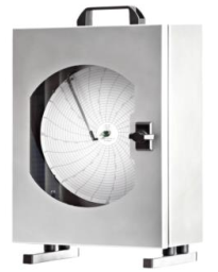
Pressure and Temperature Recorders must be calibrated regularly to ensure measurement accuracy, maintain safety, and comply with strict regulatory standards. Over time, internal electronic components, mechanical linkages, and sensors naturally degrade or shift due to environmental stress, vibration, and wear. Calibration evaluates these changes by comparing the recorder’s readings against a traceable reference standard.
Control Valves must be calibrated to ensure that their physical movement precisely matches the command signals sent by a control system. In industrial processes, a control system dictates how much a valve should open or close (usually via a 4–20 mA electrical signal or a 3–15 PSI pneumatic signal). If a valve is out of calibration, a 50% signal from the control room might only open the valve to 40%, creating severe process inefficiencies. Regular calibration is vital across industrial applications to ensure Process Accuracy and Stability.
Hydro Testing is required to verify the structural integrity, safety, and leak-tightness of pressure-containing equipment like manifolds, pipelines, hoses, gas cylinders, boilers, and pressure vessels. Because these systems operate under intense pressure, any hidden flaw could cause a catastrophic failure, leading to explosions, injuries, or severe environmental damage. The specific reasons why hydro testing is standard practice across industries includes Verifying Material and Weld Strength, Finding Hidden Leaks and Relieving Localized Stresses.
Instrument Repair & Maintenance are required to ensure operational accuracy, prevent catastrophic equipment failure, and protect significant financial investments. Expert repair, servicing, and preventive maintenance of industrial instruments to restore accuracy, extend equipment life, and minimize downtime.
Our Calibration Services
Our experienced technicians use advanced calibration equipment and internationally accepted procedures to ensure every instrument meets the highest standards of accuracy and performance.
